Key Insights
Quick Facts
- Name: I-22
- Location: Birmingham, Alabama
- Customer: Archer-Western
- Client: Interstate Highway System (I-22 project)
- Size: 15,000 cubic yards of lightweight aggregate
- Our Solution: Arcosa Lightweight provided 15,000 cubic yards of structural lightweight aggregate, reducing the weight of the fill and mitigating pressure on the culvert.
- Why Lightweight Works: The lightweight aggregate offered a high angle of internal friction and low density, reducing load on the culvert by more than half compared to traditional materials.
Final Results
-
The project was successfully completed, and today, the newly constructed lanes on I-22 safely carry approximately 75,000 vehicles daily, protecting the culvert from damage.
Key Quote
Context:
- Considerations: The innovative use of lightweight aggregate in this project marked a relatively new application for this material in protecting deep-buried infrastructure.
- Lessons Learned: Lightweight aggregate can dramatically reduce structural loads in sensitive infrastructure areas, making it a cost-effective and reliable solution.
Learn more about how Arcosa Lightweight can provide engineering solutions for your project.
Lightweight Aggregate Safeguards Concrete Drainage System for Major Interstate Project
Interstate 22 (I-22), a key connection between Birmingham, Alabama, and suburban Memphis, Tennessee, handles roughly 75,000 northbound cars a day. When engineers began designing the interchange, they faced a unique challenge: constructing new traffic lanes over an existing concrete drainage system. The sheer volume of fill material required to bring the area to grade threatened to over-stress and potentially crack the vital stormwater culvert below.
“The box culvert was quite deep, necessitating a significant amount of fill material to restore it to grade,” says Bill Wolfe, Marketing & Technical Manager for Arcosa Lightweight. “If ordinary soil or normal-weight fill material had been used, the loads could have been heavy enough to cause stress or even cracking in the culvert.”
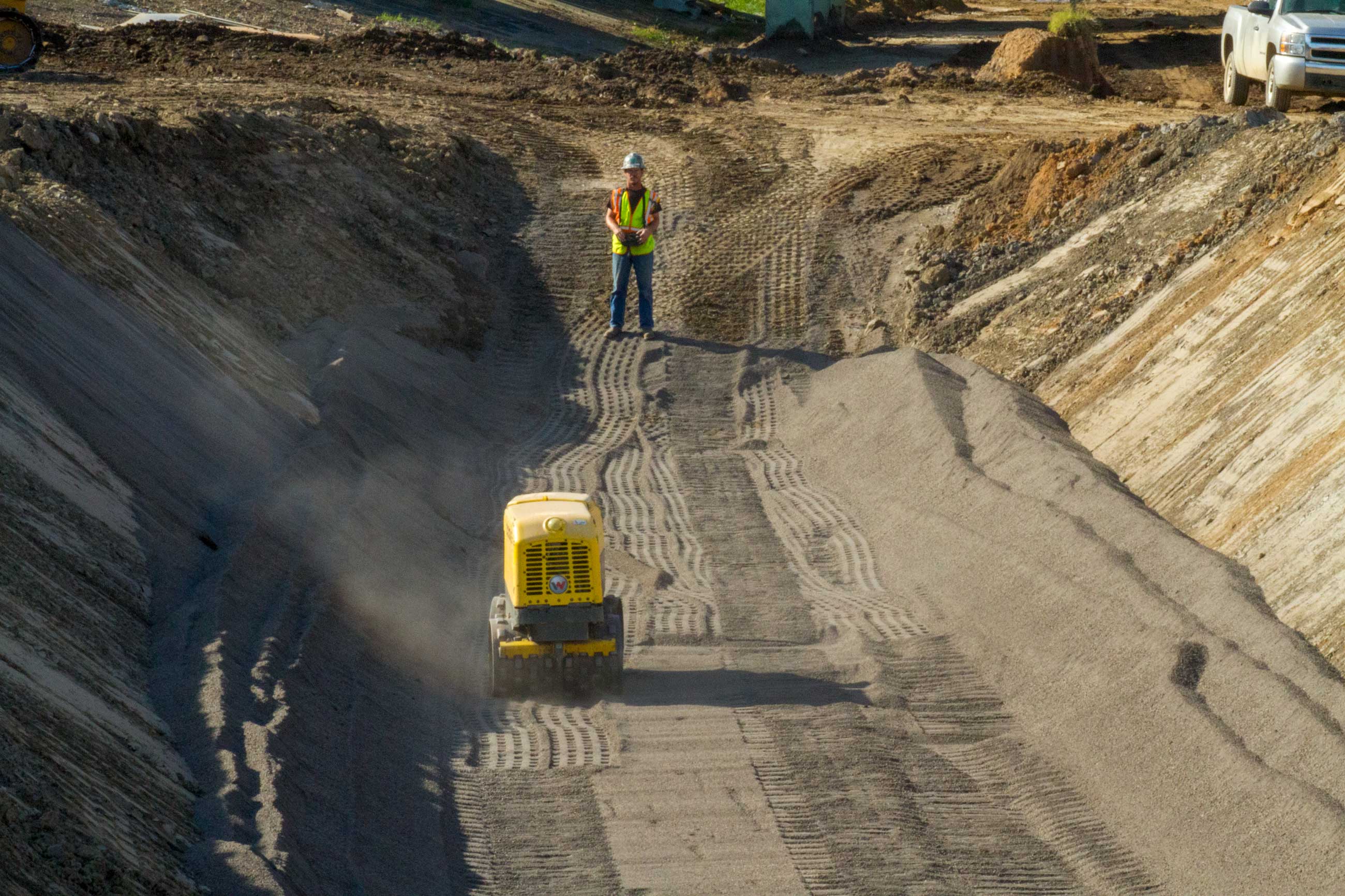
Arcosa Lightweight’s structural lightweight aggregate provided the solution. Contractors filled three excavated areas with over 15,000 cubic yards of the product.
“To reduce the weight as much as possible, they placed the lightweight aggregate dry,” explains Wolfe. “Since the trench’s sides confined the material, they achieved the necessary compaction without having to add water.”
Manufactured in Livingston, Alabama
The lightweight aggregate used in this project was manufactured at Arcosa’s Livingston, Alabama plant and transported via multiple trucks to the job site, located approximately two hours north of the plant.
“The raw material, clay, is mined and stored in a controlled environment to manage moisture. It is then processed by heating it to approximately 2000°F in a rotary kiln. Once cooled, the material is transformed from clay into a ceramic, hard, and inert aggregate,” Wolfe explains. “The material is then crushed, screened, and graded according to the customer’s specifications.”
Results
After two weeks of placement, the culvert was once again buried deep underground, supporting new traffic lanes above. Motorists today pass through the area on I-22, formerly U.S. Route 78, without ever realizing the engineering challenge that had been solved beneath their wheels.
“This project exemplifies how lightweight aggregate can offer solutions to unique engineering challenges. The distinct properties of our product allow engineers to address issues that standard fill materials simply can’t resolve,” Wolfe concludes.