Key Insights

Quick Facts
- Name: West Congress Street Bridge ICC Project
- Location: Lafayette Parish, Louisiana
- Customer: Builders Supply
- Client: Lafayette Consolidated Government
- Size: Two bridge deck spans, one guardrail wall, and one approach slab
- Our Solution: Arcosa Lightweight provided lightweight aggregate to replace a portion of fine aggregate in the concrete mix, enabling internal curing.
- Why Lightweight Works: Lightweight aggregate improves grading, reduces cracking, and enhances finishability. ICC extended the service life of bridge structures by minimizing cracking.
Final Results
-
Reduced cracking at one year, extended service life, and improved durability in the West Congress project. Based on the results, a lightweight aggregate replacement rate of 225-275 pcy is recommended.
Key Quote
Context:
- Considerations: ICC implementation should include a 7-day wet burlap cure for optimal results.
- Lessons Learned: Internal curing technology provides significant benefits, including a longer structure life with lower life-cycle costs.
Learn more about Arcosa’s lightweight aggregate solutions for infrastructure projects.
Internal Curing Concrete Proves Its Value in Reducing Cracking and Enhancing Durability for Louisiana Bridge Projects
From an engineering perspective, Mitch Wyble, P.E., City Engineer at Lafayette Consolidated Government, really likes what he sees when he discusses the value of internally cured concrete (ICC), a concrete mixture where a portion of the fine aggregate is replaced with similarly sized prewetted lightweight aggregate (LWA). Wyble first encountered ICC years ago while serving on the Technical Committee of the Concrete and Aggregates Association of Louisiana (CAAL).
As a past CAAL Technical Committee member, Wyble also knew that the Louisiana Department of Transportation & Development (LADOTD) was investigating ICC’s potential for state projects.
“I suggested we use internal curing on this particular bridge,” says Wyble, “knowing that it wouldn’t cost us any more than what the bid was for the typical cast-in-place concrete option.”
For the project, the Louisiana Transportation Research Center (LTRC) handled the mix designs, testing, and evaluation.
Arcosa provided the lightweight aggregate for the ICC, which in turn was used to build two of the five bridge deck spans, one guardrail wall, and one approach slab. The approach slab is 10’ X 30’ while each bridge deck span is 20’ X 30’ and 16 inches thick, according to Bill Wolfe, Marketing & Technical Manager of Arcosa Lightweight.
Project’s Goal
“The goal was to demonstrate the ICC’s value and monitor its performance over time,” says Wolfe, who adds that project completion was made easier due to the use of ICC.”
“Evidently, the concrete sand being used was less than ideal in terms of grading. The replacement of a portion of the sand with lightweight sand that was a little coarser in gradation had the effect of improving the performance of the combined fine aggregates, allowing the concrete to be finished more easily and with less hand trowel work.”
Expert Insight
Tyson Rupnow, Ph.D., P.E., Associate Director of Research at LTRC says the Congress Street Bridge project was based on LADOTD’s goal of reducing the cracking severity on its bridge decks.
“ICC helps reduce cracking, thus allowing us to increase the service life of our deck structures and reduce overall maintenance costs,” says Rupnow.
Calling ICC a “great tool for bridge engineers and designers,” Rupnow adds that if the process helps extend bridge service life and strength, then it should be looked at more closely for upcoming projects. That’s already happening, he says, noting that the successful West Congress Street project has already prompted Lafayette Consolidated Government to build another, 150-foot-long bridge plus barrier rails out of ICC.
Test Results
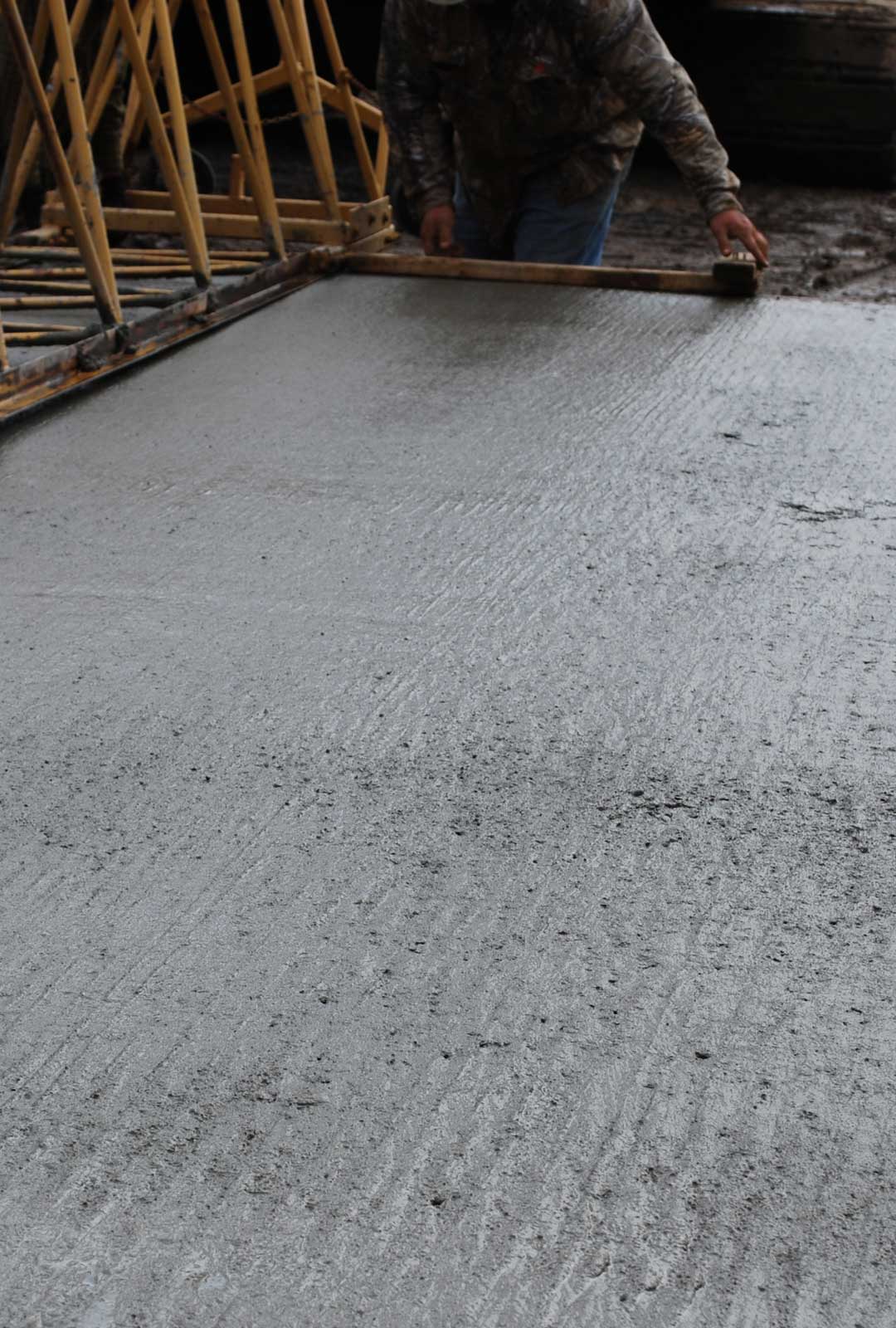
Results from the West Congress test project, released in 2016, indicate “The West Congress project showed reduced cracking at one year over the control sections. The reduced cracking will lead to longer service life and a more durable structure,” said Rupnow. The contractor noted easier finishability characteristics and that, “ICC is just like normal concrete.” Based on the laboratory and field results, a standard lightweight fine aggregate replacement rate between 225 and 275 pcy is suggested for implementation.
LTRC also issued an implementation statement: “The results show that lightweight aggregate fines, when used for internal curing purposes, do not adversely affect the fresh or hardened concrete properties. Hardened properties of strength and surface resistivity are generally improved. The cracking potential has been shown to be reduced through the two documented field applications, even where curing compound was inadvertently not applied. A standard replacement rate between 225 and 275 pcy of lightweight fines is suggested. Combining internal curing with a 7-day wet burlap cure is recommended. Implementation of internal curing technology will provide a benefit to the Department in terms of longer service-life structures with a lower life-cycle cost.”
The Lafayette Consolidated Government Engineering Group, including Mitch Wyble, was commended for their collaboration on this ICC project by LTRC, noting the importance of such partnerships for advancing infrastructure durability.
“They liked what they saw,” says Rupnow. “In the words of the contractor, producer, and engineers, ‘it looks just like regular concrete.’”
Wyble says he knew early on that ICC would be a winning option for the LADOTD – even though the material had yet to be tested by the department. In fact, Wyble’s not surprised at all that the end result was extremely positive. “The job came out beautifully,” says Wyble. “To date, we haven’t seen a single crack in that bridge.”